Packing fragile and sensitive belongings? Here’s how:
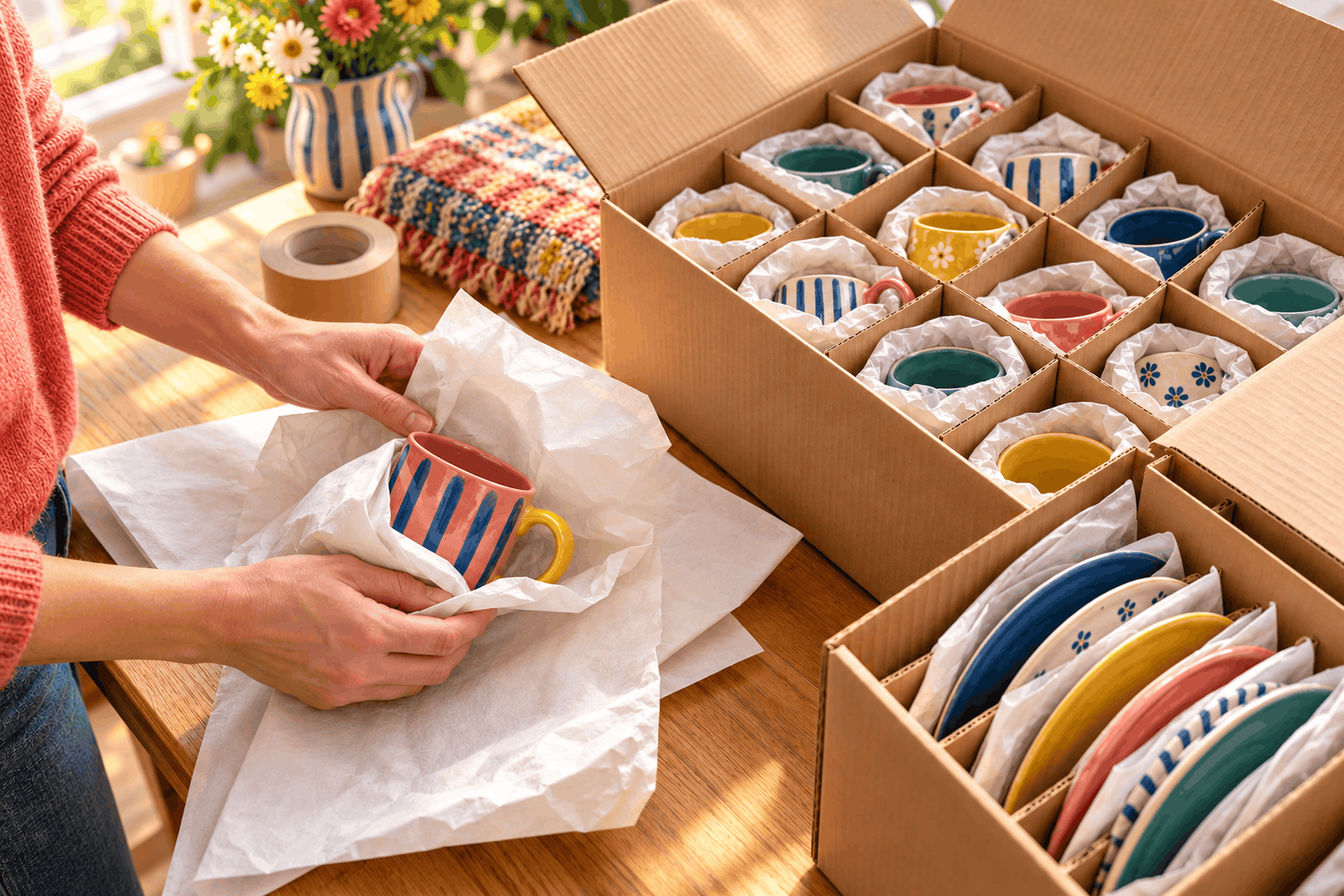
A television, your favourite tableware or a mirror: some belongings need extra care when you move them or put them into temporary storage. Suitable packaging and a carefully chosen position in your Box help prevent damage. These tips will get you started.
Start with the right packing materials
Get sturdy boxes, tape, cushioning material and suitable protection ready in advance. Choose a box that fits what you are packing. A box that is too large lets items move around, while one that is too small can put pressure on the contents.
At Box@Home, you can find moving boxes and packing materials, including moving blankets to protect your furniture.
Check used boxes for tears, damp patches and weakened bases. Reinforce the bottom with tape and add a protective layer inside the base.
Glasses and tableware: wrap each piece separately
Glasses, plates and cups can damage one another if they come into direct contact. Wrap each piece separately in soft packing paper. Give handles, stems and thin rims extra protection.
Stand plates upright next to one another in a sturdy box, with protection between them. For glasses, preferably use a box with dividers and carefully fill the remaining space.
Please note: cushioning material should limit movement without putting pressure on the glass. Do not overfill the box. Use several smaller boxes rather than one heavy box that is difficult to carry.
Televisions: protect the screen from pressure
Preferably use the original box with its protective inserts. These support the television in the right places. No longer have the original packaging? Choose a suitable television moving box with appropriate corner and screen protection.
Take a photo of the connections before disconnecting the cables. Keep the cables, remote control and any screws together in a labelled bag. Follow the manufacturer’s instructions for removing the stand and lifting the television.
Use two people to carry a large television and keep it upright when moving and transporting it. Hold it at the points specified by the manufacturer and avoid putting pressure on the screen.
In your Box: place the packed television upright and make sure it cannot slide or tip over. Do not place anything on top, and prevent furniture or boxes from pressing against the screen.
Mirrors and paintings: protect the corners too
Use a suitable mirror box or picture box and protect the corners. Make sure the item cannot move freely inside the packaging.
The surface of a painting needs extra care. Do not let bubble wrap, tape or other packing materials touch a delicate paint layer directly. For valuable or delicate works, seek advice on suitable packaging.
Store wrapped mirrors and paintings upright, stable and protected against tipping over. Stand them on a protective surface and keep heavy objects away.
Electronics: keep accessories together
Switch devices off and disconnect cables and accessories before packing them. Use the original packaging wherever possible. Otherwise, choose a sturdy box with protection suitable for the device.
Keep small electronic components that are sensitive to static electricity in suitable antistatic packaging. Ordinary plastic bags or bubble wrap do not automatically provide this protection.
Label cables and keep them with the correct device. This saves you searching when it is time to reconnect everything.
Furniture: prevent scratches and loose parts
Remove loose shelves and pack glass components separately. Keep screws and fittings in a labelled bag with the corresponding piece of furniture.
Protect furniture with moving blankets, especially at corners and edges. Do not apply tape directly to wood, lacquered surfaces or upholstery: removing it can leave adhesive residue or cause damage.
Clean furniture and let it dry completely before packing.
Give fragile belongings a safe place in your Box
Good packaging only works properly if you also load with care.
- Place heavy, sturdy items at the bottom and distribute the weight across the floor.
- Place boxes containing fragile items on top of a stable stack, with no risk of falling.
- Take each box’s load capacity into account.
- Prevent hard objects from pressing against delicate surfaces.
- Minimise empty spaces to reduce shifting during transport.
- Place items you may need during storage near the opening. Access to your Box is by appointment.
One final check before you close your Box
Check that all boxes are properly closed and stable. Could any items tip over? Is anything heavy resting on fragile packaging? Are loose parts protected?
Finally, take a few photos and keep an inventory. You will know what is in your Box and roughly where to find it.
Unsure how to pack a particular item? Contact the Box@Home team before loading. We will be happy to help you prepare your belongings for storage.
